HEPA Filtration is The Best Way to Clean Work Areas Following Remediation.
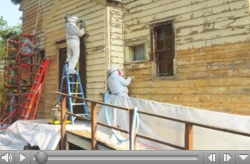
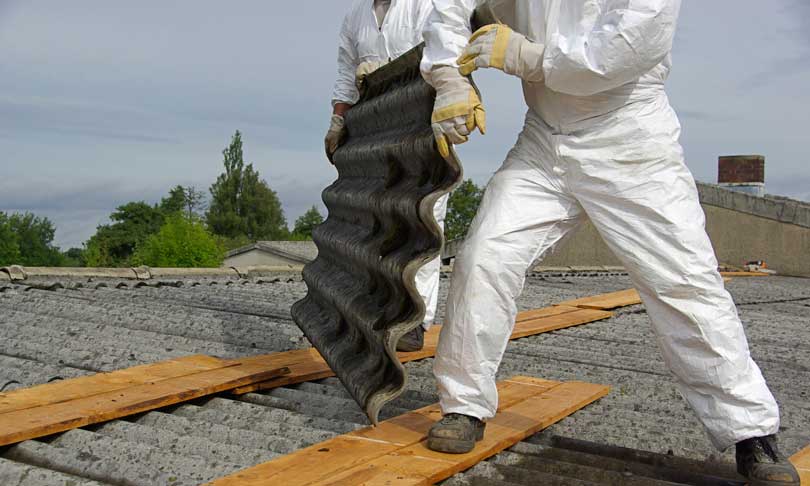
 Whether your property contains asbestos, lead paint, mold, or PCB-containing caulk, you need to be concerned about dust and particles contaminating the air you breathe and presenting serious health hazards. At AQHI Inc., we can help eliminate contamination by removing the materials releasing the dangerous particles as well as by thoroughly cleaning these particles from all surfaces that have been exposed to contamination. HEPA filtration is an important tool for our cleaning efforts.
What is HEPA Filtration?
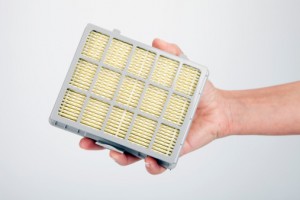
HEPA stands for High-Efficiency Particulate Air, meaning that HEPA filters do an extremely good job of trapping even very small particles and preventing them from continuing to circulate in the air. In order to qualify as a HEPA filter, products must meet guidelines established by the government including successfully capturing 99.97 percent of particles measuring at least 0.3 microns in diameter. HEPA filters can also capture much smaller particles including those less than 0.1 microns wide.
How Do HEPA Filters Work?
An ordinary filter is a mat of fibers that works like a sieve, so that any particles larger than the gaps between the fibers will get trapped, while smaller particles pass through. This process is called impaction. HEPA filters do make use of impaction, but they also add two other methods of particle capture for improved efficiency. Here are the three actions in a HEPA filter:
Impaction: HEPA filters consist of a mat of randomly arranged fiberglass fibers with diameters from 0.5 to 2 microns. The space between these fibers is generally larger than 0.3 microns, so a HEPA filter can typically only capture larger particles on its surface via impaction.
Interception: Smaller particles that do not stick to the filter immediately upon contact can be captured via interception. The curved shape of the fibers catches them and causes them to adhere to the filter.
Diffusion: The final step in HEPA filtration, and the one that makes it so powerful, is diffusion. In this step the tiniest particles, including ones less than .1 microns wide, will collide with gas molecules inside the filter and begin to move very erratically. This motion will cause them to collide with fibers in the filter and become trapped.
The Best Technology for Your Cleanup
HEPA filtration technology was originally designed in connection with The Manhattan Project, as a means of capturing radioactive particles from the air. If this technology was good enough for the greatest scientific minds of a generation, you can bet it is good enough for everyday use. At AQHI Inc. we know how to use this technology effectively to clean up asbestos fibers, lead paint dust, mold spores, and more.